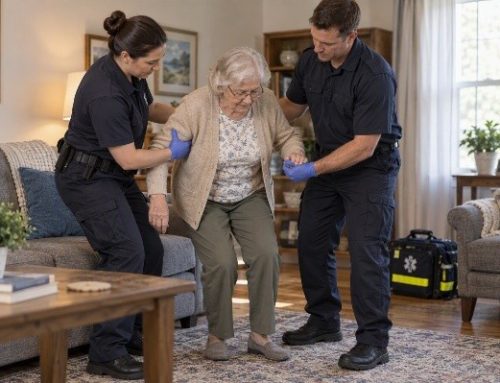

The Most Preventable Dangerous Call in EMS?
This article is the fifth installment in a 7-part series on EMS patient refusal implementation and documentation. Each article examines one specific area of refusal documentation and how to best execute a patient refusal and document the interaction in a legally defensible manner.
Part 5. Incomplete or Missing Vital Signs
By Paul Girard & Kevin Kelley
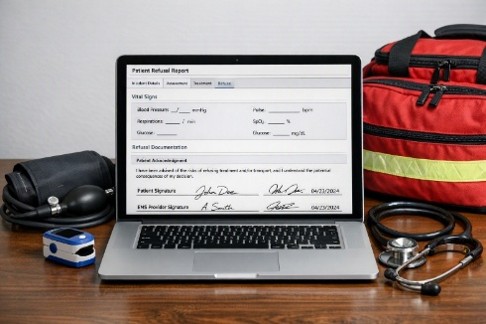
We’ve reviewed enough patient refusal cases over the past 21 years to know they almost never begin with a reckless EMS crew.
They begin with a patient who doesn’t look particularly sick.
The call is winding down. The patient is alert, talking, maybe even joking with the crew. Family members insist, “They’re always like this.” The patient says they don’t want to go to the hospital, and, after a few minutes, it seems reasonable to wrap things up and clear the call.
Most of those patients do just fine.
Some don’t.
The refusals that end up in a quality improvement meeting, an OEMS investigation, a licensing hearing, or a wrongful death lawsuit usually have one thing in common. Somewhere in the patient care report, the assessment stopped short.
Sometimes it’s obvious. A blood pressure was never obtained. Oxygen saturation is blank. No repeat vital signs. No blood glucose on an altered patient. Other times, the documentation simply doesn’t explain why the assessment was incomplete or how that limited the crew’s ability to advise the patient.
People often describe those as documentation problems.
They’re not.
They’re assessment problems.
And every informed refusal rises or falls on the quality of the assessment that came first.
“The greatest threats to safety rarely begin with one reckless decision. They begin when small departures from established practice gradually become normal.” —
Adapted from Sidney Dekker’s Drift into Failure
One of the most common CQI findings in patient refusal reviews is also one of the most preventable: incomplete or missing vital signs.
At first glance, it appears to be a documentation problem. It is much more than that.
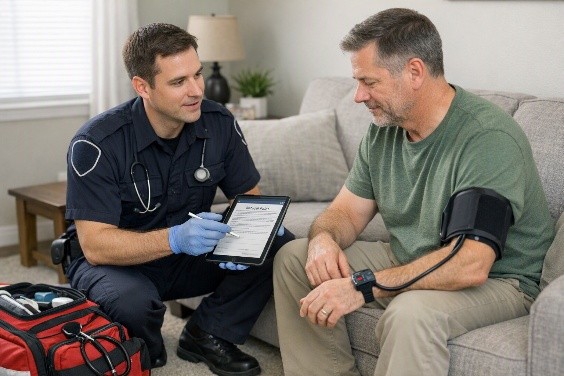
Missing vital signs raise fundamental questions about the quality of the assessment, the evaluation of decision-making capacity, the advice provided to the patient, and whether the refusal was truly informed. Those questions become especially important after a poor outcome, when the patient care report is reviewed by a quality improvement committee, medical director, state EMS office, licensing board, plaintiff’s expert, or jury.
Patient refusals should never begin with a signature. They should begin with a thorough assessment.
Your Refusal Protocol Is Your Roadmap
Every EMS provider should know one policy better than almost any other: the patient refusal protocol.
Although protocols vary among states and EMS systems, they generally require the same core elements: perform an appropriate assessment, evaluate decision-making capacity, explain the risks and benefits, document the encounter, and obtain an informed refusal.
Your refusal protocol is more than a clinical guideline.
It is your roadmap for patient safety and one of your strongest defenses when your decision is questioned months—or years—later.
Massachusetts provides one example. Massachusetts Statewide Treatment Protocol 7.5 directs EMS providers to:
“Perform an assessment of the patient’s medical/traumatic condition, and, to the extent permitted by the patient, a physical exam including vital signs. Your assessment, or the patient’s refusal of assessment, must be fully documented in the trip record.”
Whether you practice in Massachusetts, Texas, Florida, California, or anywhere else, the lesson is the same.
Know your protocol.
Follow your protocol.
Document the critical elements of your protocol.
The Pilot Who Skipped the Instrument Check

Imagine boarding an airliner for a routine flight.
As the aircraft begins taxiing toward the runway, a passenger asks the captain whether the required pre-flight inspection has been completed.
The captain smiles and replies:
“I didn’t bother checking the fuel gauges, oil pressure, engine instruments, hydraulic systems, electrical systems, or flight controls. The airplane looked fine.”
No reasonable passenger would remain on that aircraft.
Pilots understand that appearances can be deceptive. An aircraft can look perfectly normal while a critical system is failing. The purpose of the pre-flight inspection is not to complete a checklist. It is to discover hidden problems before takeoff.
Vital signs serve the same purpose during a patient refusal.
They are the patient’s flight instruments.
Blood pressure, pulse, respiratory rate, oxygen saturation, temperature, blood glucose, and other objective findings reveal physiological abnormalities that cannot always be detected through casual observation.
A patient with early sepsis may appear comfortable.
A patient experiencing an evolving stroke may still be talking normally.
A patient with internal bleeding may have no outward signs of shock.
A patient with hypoxia may insist they feel fine.
Without objective clinical information, EMS is relying largely on appearance, intuition, and patient reassurance.
That is not the purpose of a patient assessment.
Drift Into Failure
In Drift into Failure, safety scientist Sidney Dekker explains that catastrophic events rarely result from one reckless act. Instead, organizations gradually move away from established safety practices through a series of small adaptations that appear reasonable at the time.
We see this all the time in the CQI process. Providers skip one small step, and it never gets brought to their attention. They cut another corner and then another until something significant happens. This is not only a patient care problem, it is a CQI process problem if it is not caught and brought to the attention of the provider before something goes wrong!
In most CQI reviews, you can see in the report each small step omitted or neglected. It oftentimes starts giving the auditor an uneasy feeling while reading the report. That feeling gives way to dread as the small issues keep piling up and you realize this encounter is going to end badly.
People do not intentionally become unsafe.
They adapt.
EMS providers recognize this process immediately.
The patient insists they are fine.
The emergency department is crowded.
The crew has been holding over.
Another call is pending.
The patient “doesn’t look sick.”
A blood pressure is skipped.
Nothing bad happens.
A glucose is omitted because the patient is alert.
Nothing bad happens.
Pulse oximetry is not obtained because the patient denies shortness of breath.
Nothing bad happens.
Eventually, incomplete vital signs become routine—not because anyone decided they should, but because previous shortcuts appeared harmless.
This is drift into failure.
The patient who later dies or suffers permanent injury is rarely the first patient for whom vital signs were incomplete. In fact, when an incident does occur, a deep dive into that providers run reports almost always shows many previous calls where they did the same thing. It is this catastrophic failure in the CQI process that oftentimes leads to agencies contacting G&A for assistance.
More often, that patient is the first one to expose a practice that has quietly drifted away from the standard it was designed to achieve.
Vital Signs Make Refusals Smarter
Vital signs do much more than document the encounter.
- They establish a physiological baseline.
- They identify hidden illness.
- They support evaluation of decision-making capacity.
- They provide objective information that allows EMS to explain the patient’s actual risks rather than generic risks.
- They create an opportunity to change the patient’s mind.
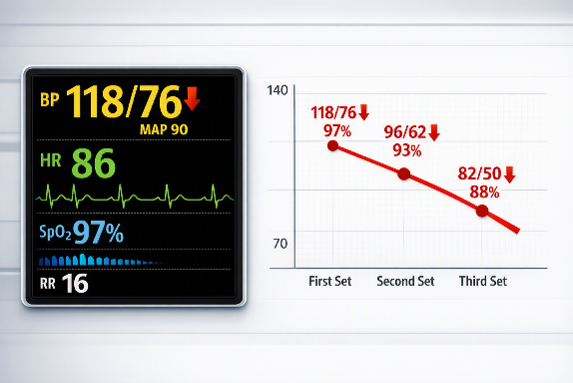
Patients often refuse transport because they believe nothing serious is wrong.
Objective findings can tell a different story.
Seeing blood pressure fall, heart rate rise, oxygen saturation decline, or glucose remain critically abnormal may persuade a patient that further evaluation is necessary.
That conversation is far more persuasive when supported by objective clinical evidence.
Abnormal Vitals Should Change the Conversation
Vital signs are not just for the PCR. They are tools for patient communication. If the patient’s vital signs are abnormal, the patient must be told what the findings are, why they matter, and how they affect the recommendation for transport.
It is not enough to write, “Patient advised of abnormal vitals.” That is a conclusion. The documentation should show the conversation. For example: “Explained to patient that blood pressure was 86/52 and heart rate was 118, which may indicate dehydration, bleeding, infection, cardiac problem, or another serious condition that cannot be ruled out in the home. Strongly recommended ambulance transport for emergency department evaluation. Patient verbalized understanding and stated, ‘I know you are worried, but I am not going.’”
That kind of documentation does several things. It shows the patient was informed of actual findings. It connects those findings to specific risk. It demonstrates that EMS used the data to advocate for transport. It captures the patient’s response. And it helps prove that the refusal was informed, not merely signed.
Use the Vitals to Persuade, Not to Pressure

There is an important difference between persuasion and coercion. EMS should never scare a patient dishonestly, exaggerate findings, threaten the patient, or make refusal impossible through intimidation. But EMS absolutely should use objective clinical data to explain why transport is recommended.
Patients often need plain language. “Your oxygen level is lower than we want it to be.” “Your blood pressure is too low for us to safely leave without recommending hospital evaluation.” “Your heart rate is not normal for someone sitting still.” “Your blood sugar is low, and it can drop again after we leave.” “Your symptoms may have improved, but these numbers still concern us.”
The goal is to help the patient understand what EMS sees that they may not feel. Vitals make hidden risk visible. When patients are deciding whether to refuse, they deserve to know the objective findings that are driving the EMS recommendation.
When the Patient Refuses Vitals
Some patients refuse vital signs. That does not end the analysis. It starts a different discussion and documentation obligation.
If a patient refuses vital signs, explain why the assessment is important, what information the vital signs provide, and what risks are created by refusing the assessment. Document the patient’s specific refusal and the reason they gave, if any, along with your response to attempt to allay those fears. Document observable findings such as mental status, work of breathing, skin signs, speech, gait, apparent distress, and any other assessment data that can be obtained by observation without violating the patient’s refusal.
A strong narrative might read: “Patient refused blood pressure, pulse oximetry, blood glucose, and temperature despite explanation that vital signs are needed to evaluate for serious illness or injury and to help determine whether refusal is safe. Patient stated, ‘I do not want anything done.’ Patient was awake, speaking clearly, ambulatory without assistance, respirations non-labored, skin warm and dry. Risks of refusing assessment and transport explained. Patient continued to refuse.”
If the refusal of vital signs itself raises concern about capacity, intoxication, altered mental status, psychiatric crisis, language barriers, or inability to understand the consequences, that concern must be addressed. In high-risk situations, medical control should be contacted when required by protocol or when clinically prudent.

Paul Girard of Girard & Associates, Inc. The National EMS Quality Improvement Consulting Firm has reviewed thousands of patient refusal reports through quality improvement programs, risk management reviews, and litigation support. His practical advice reflects decades of experience reviewing refusal cases.
“One complete set of vital signs should be considered the minimum on virtually every refusal. Better yet, obtain more than one set whenever time and the patient’s condition permit. If the patient will not allow you to obtain vitals, that should be clearly reflected in the PCR”.
Trending vital signs demonstrates a more thorough assessment. It increases the likelihood of identifying changes while EMS is still on scene and able to intervene. Just as importantly, showing patients that their condition is changing often convinces them to reconsider their decision and accept transport. It also shows the reader that the crew took their time and tried to provide the patient with a more thorough analysis of what may be going on so the patient can make an informed decision.
Conversely, obtaining no vital signs or only a partial set without documenting why the remainder could not be obtained limits the provider’s ability to recognize serious illness and provide meaningful advice regarding the risks of refusing care. Simply put, the less objective information you have, the greater the chance that a significant medical condition will be overlooked.
Looking Through the Eyes of a Reviewer
When a refusal results in litigation or a regulatory investigation, reviewers rarely focus on the missing blood pressure itself.
Instead, they ask:
- How did EMS determine the patient was medically stable?
- What objective findings supported the recommendation?
- How was decision-making capacity evaluated?
- How were the specific risks of refusal explained?
- If vital signs were missing, was that because the patient refused them, or because EMS never attempted to obtain them?
- Does the documentation demonstrate a careful assessment or a hurried departure?
The patient care report becomes the primary witness.
It should tell the entire story.
When the clinical documentation shows a 6 minute on scene time, partial or missing vitals and a three sentence narrative, it does not take a significant leap to assume the crew acted in an irresponsible manner. It also does not come as a surprise when the patient outcome is less than ideal.
What Strong Refusal Vital Sign Documentation Should Include
For vital signs in a refusal, the PCR should clearly document:
- the complete initial set of vital signs and the time obtained;
- any targeted assessment findings required by the complaint, protocol, or clinical presentation;
- serial vital signs when obtained, including whether the patient improved, worsened, or remained unchanged;
- any abnormal findings and what they may indicate;
- the fact that the patient was informed of those findings and the potential clinical implications in plain language;
- the specific recommendation for transport based on the findings;
- the patient’s response, preferably in the patient’s own words;
- any refusal of vital signs or refusal of repeat vital signs;
- medical control contact when required or clinically appropriate; and
- clear return precautions and instructions to call 911 again if symptoms continue, worsen, or change.
This does not require dramatic writing. It requires complete writing. The narrative should show that the provider assessed the patient, recognized what the numbers meant, explained the concern, recommended transport, and documented the patient’s informed decision.
Lessons Learned from the Patient Refusal Files: Protect Yourself Tomorrow

Every experienced EMS provider has looked at a refusal call and thought, “The patient is probably fine.”
Most of the time, they are right.
The problem is that patient refusals are not judged by what happens most of the time.
They are judged by the one patient whose occult sepsis, myocardial infarction, stroke, internal hemorrhage, hypoxia, diabetic emergency, or traumatic injury was not recognized before EMS cleared the scene.
The pilot who skips the pre-flight instrument check usually lands safely.
Until the day they don’t.
The same is true of patient refusals.
Vital signs are not paperwork.
They are not numbers entered into an electronic patient care report simply because a protocol requires them.
They are objective evidence that helps distinguish the patient who appears well from the patient who actually is well.
Protocols, like aviation checklists, exist because human beings are vulnerable to production pressure, overconfidence, confirmation bias, and what Sidney Dekker describes as drift into failure. Good clinicians do not wake up intending to lower their standards. They gradually adapt to operational pressures until yesterday’s exception becomes today’s routine.
Don’t let that happen to you.
Know your refusal protocol.
Perform a complete assessment.
Obtain and trend vital signs whenever possible.
If the patient refuses part or all of the assessment, document exactly what was offered, what was refused, why it mattered, and how that refusal limited your ability to evaluate the patient’s condition and counsel the patient about the risks of refusing care.
Because when a refusal is reviewed months or years later, no one will remember how busy your shift was, how many calls were holding, or how strongly the patient insisted they were fine.
They will remember one thing: Your patient care report.
And remember this important point.
The people evaluating the refusal after a bad outcome won’t have the benefit of being on scene. They’ll have your patient care report. Whether the reviewer is your CQI coordinator, your medical director, an OEMS compliance investigator, a plaintiff’s expert, an administrative law judge, or a jury in a wrongful death lawsuit, the analysis almost always begins with the same question:
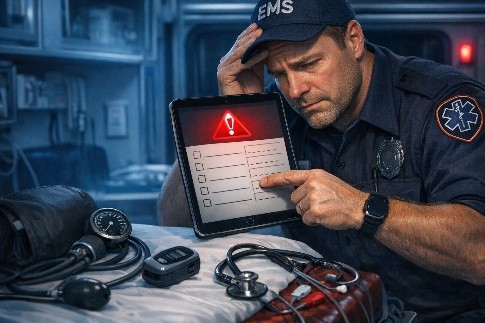
Did the crew have enough objective clinical information to reasonably conclude that the patient could refuse care?
And if they didn’t, they are screwed.
The Bottom Line
A patient refusal without vital signs is not just incomplete documentation. It is an incomplete refusal process. Vital signs help identify hidden risk, support capacity and risk assessment, guide medical control decisions, and provide objective data that can be used to persuade the patient to accept transport.
Every refusal patient deserves a real assessment. Every provider deserves a defensible chart. Accurate, thorough, and complete vital signs—preferably serial vital signs when appropriate—are one of the simplest and strongest ways to accomplish both.
Incomplete vital signs create ambiguity. Ambiguity creates risk. If the PCR documents only “BP 138/84” and nothing else, reviewers cannot tell whether the patient was oxygenating adequately, breathing normally, perfusing normally, febrile, altered, hypoglycemic, or trending worse. The chart may technically contain a vital sign, but it does not contain enough information to support a safe refusal decision.
¨¨¨¨¨¨
If your organization needs help with patient refusal documentation, contact us for a quote to create a custom program for you.
You can also check out our introductory article on this topic: Patient Refusals: A Risk to an EMS Providers Life, Liberty, and Pursuit of Happiness
Or Part 1 in the series: Incomplete Patient Assessment
Part 2 in the series: Missing Signatures and Incomplete Refusal Forms
Part 3 in the series: Poorly Explained Risks of Refusing
Part 4 in the series: Failure to Contact Medical Control on High-Risk Refusals
For more information you can visit the Girard & Associates website at www.girardassoc.com or contact Paul Girard at paul.girard@girardassoc.com or Kevin Kelley at kevinkelleylaw@gmail.com.
About the Authors
Paul Girard, a retired paramedic and EMS Director, is the Founder and President/CEO of Girard & Associates, Inc., a national EMS clinical quality improvement consulting firm. He has worked in EMS continuous quality improvement since the mid-1980s and founded Girard & Associates, Inc. in 2005 to help EMS agencies better monitor, evaluate, and improve the patient care they provide. An EMS CQI entrepreneur, Paul invented and utilizes a proprietary scoring and rating system that drives a teaching, coaching, and mentoring-based CQI process, supporting providers in strengthening clinical judgment, documentation quality, and professional performance. The firm delivers CQI auditing, program development, and CQI program administration for EMS agencies nationwide. Paul is also the co-host of “The G&A Way EMS CQI” podcast.
Kevin J. Kelley, Esq. began his EMS career in 1986. A retired paramedic and EMS Director turned attorney in 2004, Kevin is the founder of Rescuing Rescuers, PLLC, a Massachusetts law firm dedicated to representing firefighters, EMTs, paramedics, and other licensed healthcare professionals. His practice focuses on EMS license regulatory defense, on- and off-duty criminal and self-defense matters, clinical documentation risk assessment, and firehouse EMS-focused education designed to strengthen patient safety, provider decision-making, and professional defensibility before DPH/OEMS, Division of Administrative Law Appeals, and civil and criminal courts. Kevin is also the co-host of “The G&A Way EMS CQI” podcast.