
By Paul Girard
In over 45 years in EMS, I don’t ever recall a provider stating the reason they got into EMS was to do paperwork. Most of us in EMS got into it for the patient care. Hang out around any EMS station and you are likely to hear war stories about the last patient and what a tough tube they were. You don’t often hear war stories about writing a good narrative.
The truth is EMS has always minimized the importance of good, thorough documentation. Most EMS training programs devote precious little time to this skill and most state and federal requirements for EMS documentation education are minimal. Add to that the lack of organizational efforts to improve documentation and it is easy to see why the state of EMS report writing is so poor.
Over the many years I have been performing EMS quality improvement, I can tell you with certainty that most providers do not have the skills necessary to write a complete, thorough and accurate report.
In fact, much of our time in the CQI process is spent helping individual providers understand what parts of the report they document well and identifying improvement opportunities for each provider to improve their skill in this critical area. After all, you can’t do good CQI with bad documentation.
If your agency’s CQI program is not giving you feedback on how you can improve your documentation, they are not doing a good job! Each provider should know how well they are doing, where they can improve and in what areas they have made progress. The implications of bad documentation are significant.
Emergency Medical Services has long emphasized assessment, treatment, transport, and teamwork. Today, however, another skill belongs in that same category: documentation. A complete patient care report is no longer simply an administrative task completed after the call. It is a clinical communication tool, a quality improvement record, a legal document, a billing foundation, and an operational data source. In modern EMS, the ability to write a complete, thorough, and accurate report is a critical skill for every provider.
The implications of bad report writing
Consider that bad report writing can produce negative patient outcomes or seriously alter your career by:
- Impacting revenue that can create financial hardship for your agency (as many agencies are struggling financially, this could push them over the edge of fiscal solvency);
- Creating legal risk for the provider and the agency if a question arises on the appropriateness of the care provided that the report cannot adequately explain;
- Impacting a provider’s livelihood if certifying agencies determine your care is poor due to a lack of detail, or inaccurate details, as noted in the report (even a short term restriction on your ability to practice from a certifying agency can cause you significant financial hardship);
- Allegations of Civil Rights or other violations on the part of the provider that can be manifested if the documentation implies the care was not adequate possibly due to bias on the part of the provider;
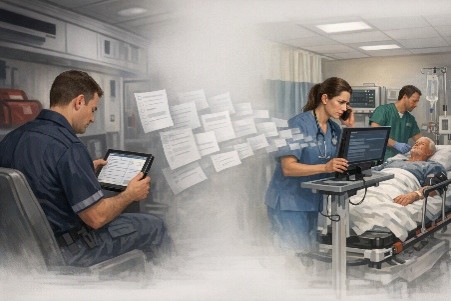
- Downstream patient care errors or inappropriate medical care by other members of the healthcare team that relied on your documentation to make clinical decisions;
- Delayed or missed diagnosis in the emergency department when EMS findings such as onset time, baseline mental status, medication history, mechanism of injury, or symptom progression are not clearly documented;
- Inappropriate triage decisions if the receiving facility does not understand how sick the patient appeared in the field, how the patient changed during transport, or why EMS selected that destination;
- Failure to recognize clinical deterioration because serial vital signs, reassessments, pain scores, mental status changes, or treatment response were not documented clearly enough to show a trend;
- Medication errors or duplicated treatments when medications given by EMS, dosages, routes, times, or patient response are missing or unclear;
- Missed contraindications or allergies if EMS obtained important history from the patient, family, bystanders, medication bottles, or the scene but failed to include it in the report;
- Poor continuity of care for vulnerable patients, including elderly patients, pediatric patients, patients with altered mental status, language barriers, behavioral health concerns, or patients who cannot reliably tell their own story later;
- Missed opportunities for specialty care activation, such as stroke, STEMI, sepsis, trauma, or obstetric alerts, if key assessment findings and timelines are incomplete;
- Incorrect assumptions by hospital staff when undocumented care makes it appear that EMS did not assess, monitor, treat, or reassess the patient;
- Poor hand-off reinforcement because the written report does not support or preserve what was verbally communicated at transfer of care;
- Gaps in follow-up care or discharge planning when EMS-observed social, safety, mobility, medication, or home-environment concerns are not documented;
- Reduced ability to learn from patient outcomes because CQI and medical direction cannot connect field care decisions to what happened later in the patient’s clinical course.
- The initiation of legal proceedings by the patient or family members who may have read the report and believe their care was inadequate or the documentation of their care is not consistent with what they observed on scene;
- Medical direction restricting your authorization to practice based on perceived patient care as noted in your PCR.
- Limitations in advance practices if documentation does not support the need for new and advanced therapies (one agency we worked with wanted to use RSI and needed to produce data to show the need. As many of the reports they used to show the need were poorly written, their medical director felt they did not make their case to add RSI. Even worse, the poor documentation made the medical control committee concerned that the agencies’ existing standard of care was not very good).
The above list includes 20 bullet points regarding how bad documentation can create problems, and that is the short list! If you are thinking the list above is hypothetical. I can tell you we have dealt with every one of those issues in our 21 years of performing EMS CQI. These issues happen more frequently than you might imagine. Just look at your EMS news feed if you need further proof.
There are so many potential negative consequences to a poorly documented report that classifying report writing as a critical skill no longer feels like simply a scare tactic.
If you don’t think people are reading your reports and making decisions based on what you write, you are seriously behind the times in your thinking.
Documentation as a Clinical Skill
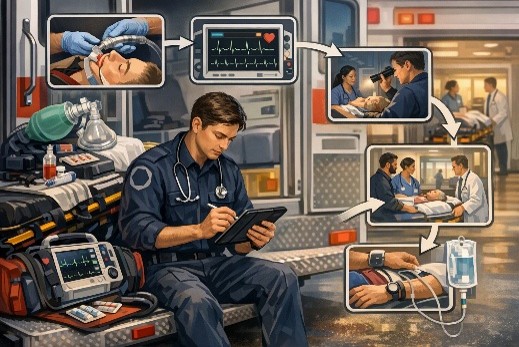
EMS documentation captures what providers saw, thought, did, and why they did it. It should tell the story of the call from dispatch through transfer of care, including the patient’s condition, assessment findings, clinical decision-making, treatments provided, responses to treatment, changes during transport, and the handoff to the receiving facility.
Providers often view documentation as something separate from patient care, but that thought process is outdated. The care delivered in the field may influence emergency department decisions, specialty activation, admission planning, follow-up care, and later review of patient outcomes. If key findings, times, medications, assessments, or clinical reasoning are missing, the next clinician may be forced to make decisions with an incomplete picture. In that sense, poor documentation can become a patient care issue.
One cardiologist I spoke with stated he could tell me who the high-quality agencies and individual medics are based on his reading of the patient care reports when the patient arrives at the cath lab. That should tell you that not only does the cath lab staff read your reports, but they are also forming an opinion of how good of a patient care provider you are based on what you write.
Your reputation as a clinical provider extends well beyond the ED that you transport to. The cath lab physician went on to tell me he drives the long way home to avoid driving through one of the towns he considers not very good. All that from reading the EMS reports!!
Keep in mind that a well-written report makes a chaotic scene understandable to the reader of the report. Clarity is needed for anyone reading the report to understand what happened, what you did about it and what the results were. When done properly, the PCR should help the reader feel as if they were on the call with you and can understand in their mind what you had to deal with on scene.
Providers should be able to exhibit the same level of competency in documentation as any other skill.
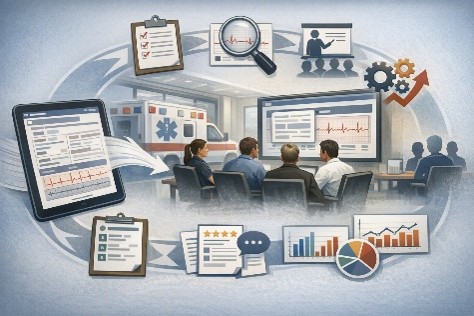
The Role of Documentation in CQI
Continuous Quality Improvement depends on accurate information. CQI teams cannot reliably evaluate clinical performance, protocol compliance, response patterns, treatment effectiveness, or system gaps unless the patient care report reflects what actually occurred. Documentation provides the raw material for case review, trend analysis, protocol development, skills remediation, and recognition of excellent care.
If the report is incomplete, reviewers may be unable to distinguish between care that was not performed and care that was performed but not documented. That uncertainty weakens the CQI process and can lead to missed opportunities for improvement.
High-quality documentation also supports system-level improvement. Standardized EMS data can be used to benchmark performance, identify clinical trends, evaluate interventions, support public health surveillance, and guide resource planning. When reports are accurate and consistent, agencies can make better decisions about training, equipment, deployment, protocols, and patient safety initiatives.
Implications for Patient Care
The patient care report is often the most complete record of the prehospital phase of care. It may contain information that no one else observed: the condition of the scene, the patient’s initial presentation, bystander statements, medication containers found nearby, baseline vital signs, changes over time, and the patient’s response to treatment. These details can shape diagnostic thinking and treatment after arrival at the hospital.
Thorough documentation also reinforces clinical accountability. It requires the provider to think through the call, organize findings, justify interventions, and identify gaps. This reflection can strengthen clinical judgment over time. A well-written report demonstrates that the provider understood the patient’s condition, followed appropriate protocols, monitored response to care, and communicated relevant information to the next level of care.
The Need for Better Training and CQI Focus
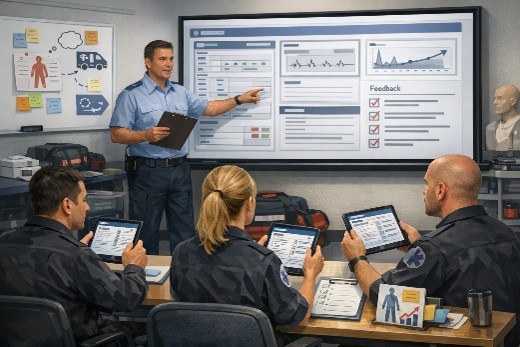
If documentation is a critical skill, it must be taught, practiced, reviewed, and improved like any other EMS skill. Agencies should not assume that providers will naturally become strong report writers simply through experience. Documentation requires knowledge of clinical terminology, legal standards, billing requirements, local protocols, narrative structure, data fields, medical direction requirements, and the ability to clearly explain clinical reasoning.
Training should begin in initial education and continue throughout a provider’s career. New providers need instruction on what belongs in a report, how to document pertinent positives and negatives, how to describe assessment findings, how to record treatment response, and how to avoid vague or unsupported statements. Experienced providers benefit from case-based review, examples of strong narratives, feedback on recurring omissions, and updates when documentation standards or electronic reporting systems change.
Have you ever considered that whenever a new protocol is implemented, training should not only include standard training on when and how to use that protocol, it should also include how providers should document their use of the new protocol.
CQI programs should include documentation quality as a regular review category, not only a compliance checkbox. Reviews should look at whether the report supports the clinical impression, whether interventions are linked to assessment findings, whether times and reassessments are complete, whether refusals and handoffs are clearly described, and whether the narrative matches the structured data fields.
Feedback should be timely, educational, and consistent, with the goal of improving both documentation and care. Every provider should know exactly how they are doing regarding documentation, where they do well, what can be improved and the progress they are making in improving their documentation practice.
Billing, Compliance, and Reimbursement
EMS billing depends heavily on documentation. The report must support medical necessity, level of service, transport decision, mileage, destination, patient condition, and services provided. If those elements are incomplete or unclear, a legitimate claim may be delayed, reduced, denied, or challenged during an audit. Inadequate documentation can affect agency revenue, compliance risk, and ultimately the resources available to support field operations.
Billing documentation should never be exaggerated or written only to obtain payment. It must be truthful, objective, and clinically accurate. However, providers should understand that if the patient required ambulance transport, the report must clearly explain why. Describing the patient’s condition, functional limitations, risks during transport, monitoring needs, interventions, and clinical rationale helps ensure that the record accurately supports the service that was provided.
The billing department will need all of this information to bill properly and prevent accusations of inappropriate billing. Good documentation can also lead to decreased rejections and improve cash flow.
One agency we worked with saw a 20% increase in revenue after we implemented a proper CQI program. Their documentation was so bad, the billing service simply filed many claims as they not only could not obtain enough data to bill the call properly, but management did not seem to want to help tackle the problem. It employed a new management team and an outsourced CQI service to fix the problem.
Legal Protection and Professional Accountability
The patient care report is often the most important record reviewed after a complaint, investigation, deposition, or lawsuit. Memories fade, providers move on, and details become difficult to reconstruct.
A timely, accurate report written close to the event is far more reliable than recollection months or years later. Good documentation can demonstrate that the provider acted reasonably, followed protocols, reassessed the patient, communicated appropriately, and met the standard of care.
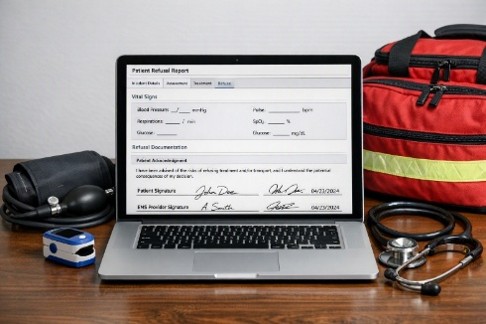
Conversely, incomplete or inconsistent documentation can create questions even when the care was appropriate. Missing vital signs, unclear refusal language, undocumented reassessments, absent medication effects, or contradictory narratives may weaken the provider’s credibility.
Documentation is therefore not only a defensive tool; it is a professional obligation that reflects the seriousness of EMS as a healthcare discipline.
Operational Value of EMS Documentation
Beyond the individual patient encounter, EMS documentation supports daily and long-term operations. Response times, call types, patient acuity, transport destinations, procedure frequency, medication use, refusals, lift assists, scene delays, and unit utilization can all inform operational planning. Agencies use this information to evaluate staffing, deployment, mutual aid needs, equipment readiness, training priorities, and community risk reduction efforts.
Accurate reporting also strengthens communication with hospitals, medical directors, regulators, payers, and municipal leaders. Reliable data can justify funding, support grant applications, identify service gaps, and demonstrate the value EMS brings to the healthcare system. Poor data, by contrast, can make an agency appear less effective than it is and can obscure real needs that deserve attention.
Building a Culture of Strong Documentation
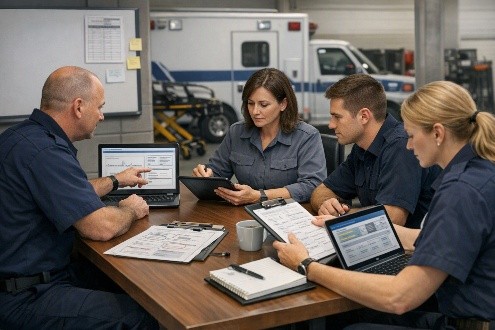
Improving documentation requires more than reminding providers to “write better reports.” It requires a culture that treats documentation as part of patient care. Leaders should set clear expectations, provide practical examples, ensure providers have time and tools to complete reports properly, and use CQI feedback to coach rather than simply criticize. Supervisors and educators should model the importance of documentation by reviewing reports consistently and recognizing high-quality work.
The most effective tool is individual feedback to providers with specific details of how they are performing and where they can improve. I oftentimes work with agencies that tell me they have run documentation class, after documentation class and the improvement is minimal. They get frustrated and sometimes start to blame the providers for intentionally not improving.
The providers will state they keep getting the same classes over and over again and do not understand why. They will routinely state that their documentation is good so it must be everyone else that is the problem. The problem is that a class is too generalized, and each provider does not understand if and what parts of the class are applicable to them. They often believe that they write good reports because no one ever told them they do not.
Without individual feedback people are unlikely to change their behavior because they think they are doing fine.
Electronic patient care reporting systems can help by prompting required fields, standardizing data, and supporting review, but software alone cannot create a complete narrative or sound clinical reasoning. Providers still need to understand what matters, why it matters, and how to communicate it clearly.
The strongest reports combine accurately structured data with a concise narrative that explains the patient’s story and the provider’s decisions. It puts the call, and what you did on the call, into context.
Conclusion
EMS documentation has become one of the defining skills of modern prehospital care. It affects patient outcomes, CQI, billing, legal protection, compliance, operations, research, and public trust.
A complete, thorough, and accurate report shows what happened, why it happened, and how the provider responded. It protects patients, supports providers, strengthens agencies, and improves the EMS system as a whole.
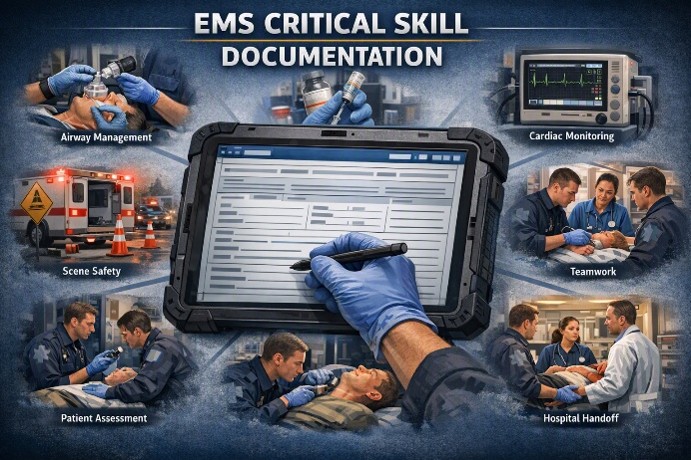
As EMS continues to evolve as an essential part of healthcare, documentation must be treated with the same seriousness as airway management, medication administration, cardiac monitoring, and scene safety. The report is not the end of the call; it is the record that carries the call forward. For that reason, every EMS provider must be trained, coached, and expected to document with the accuracy and professionalism that patients deserve.
Proper documentation is every bit as important to the success or failure of a provider’s career as being able to intubate a patient or get a difficult IV, and it is impossible to not classify documentation as a critical skill. Unfortunately, until we provide our providers with the tools, education and feedback required to help them produce adequate reports, the risk will continue to be monumental and largely unmanageable.
¨¨¨¨¨¨
For more information you can visit the Girard & Associates website at www.girardassoc.com or contact Paul Girard at paul.girard@girardassoc.com.
About the Author
Paul Girard, a retired paramedic and EMS Director, is the Founder and President/CEO of Girard & Associates, Inc., a national EMS clinical quality improvement consulting firm. He has worked in EMS continuous quality improvement since the mid-1980s and founded Girard & Associates, Inc. in 2005 to help EMS agencies better monitor, evaluate, and improve the patient care they provide. An EMS CQI entrepreneur, Paul invented and utilizes a proprietary scoring and rating system that drives a teaching, coaching, and mentoring-based CQI process, supporting providers in strengthening clinical judgment, documentation quality, and professional performance. The firm delivers CQI auditing, program development, and CQI program administration for EMS agencies nationwide. Paul is also the co-host of “The G&A Way EMS CQI” podcast.